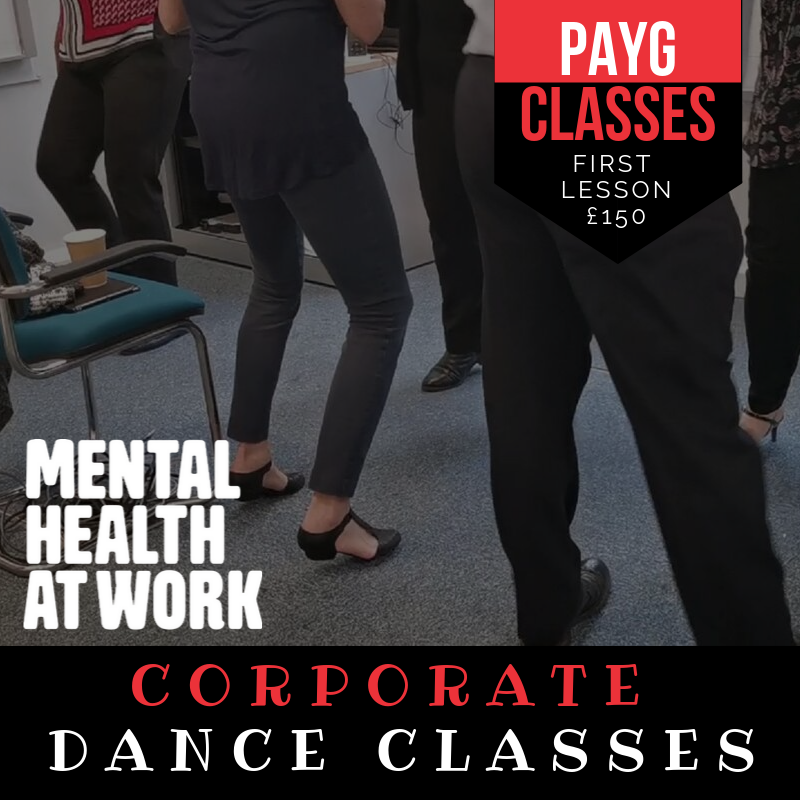
Companies are increasingly using dance-based workshops, such as Latin dance, Zumba, and partner-dance team sessions, as a corporate wellbeing activity because they combine physical exercise, stress reduction, and structured social interaction in a single session. Unlike a typical away-day icebreaker, dance requires coordination between colleagues, which builds trust and communication faster than conversation-based exercises alone. For HR and People teams looking for a wellbeing activity with a measurable impact on mood, energy, and team cohesion, dance has become one of the fastest-growing options on the corporate calendar.
Below, we break down exactly why dance works as a wellbeing intervention, the evidence behind it, the formats companies are booking, and how to structure a session for your own team.
What Is Corporate Wellbeing Dance?
Corporate wellbeing dance refers to structured dance sessions, typically Latin dance styles like salsa, bachata, and reggaeton, or high-energy formats like Zumba, delivered in the workplace or at offsite events specifically to support employee mental health, physical activity, and team bonding. Sessions are usually led by a professional instructor, require no prior dance experience, and are adapted for mixed-ability groups in a way that traditional fitness classes often aren't.
Unlike a generic gym session, corporate dance workshops are designed around group interaction, which is what makes them effective for team building specifically, not just fitness.
Why Does Dance Work So Well for Workplace Wellbeing?
Dance addresses three things most single-format wellbeing activities can't do at once: physical activity, stress relief, and social connection.
1. It reduces stress and anxiety measurably
Physical movement releases endorphins and lowers cortisol, but dance adds a rhythmic and social component that research has linked to greater reductions in anxiety compared with solitary exercise. For employees dealing with high-pressure deadlines, a 45-60 minute dance session can lower stress in a way a seated wellbeing talk typically cannot.
2. It builds trust and communication faster than most icebreakers
Partner and group dance formats require employees to give and receive non-verbal cues, adjust to a partner's pace, and problem-solve together in real time. This mirrors the collaborative skills needed at work, including active listening, adaptability, and mutual trust, but builds them through movement rather than discussion, which tends to feel less forced for participants.
3. It boosts energy and mood without needing "fitness" as the goal
Because the focus is on rhythm, music, and connection rather than performance, dance sessions are inclusive of employees who might avoid a typical HIIT or bootcamp-style wellbeing activity. This makes attendance and engagement higher across mixed-fitness-level teams.
4. It creates a shared, memorable experience
Teams consistently report that dance sessions are one of the most talked-about wellbeing activities post-event, because there's a natural sense of shared achievement. Everyone learns something new together, regardless of job title or seniority.
What Does a Corporate Dance Session Actually Look Like?
Most corporate wellbeing dance sessions follow a similar structure, whether delivered as a one-off event or a recurring wellbeing initiative:
Warm-up (5-10 minutes): Light movement and rhythm exercises to ease people in, regardless of experience.
Core teaching block (20-30 minutes): A simple routine or partner-dance basics broken into manageable steps.
Group or partner practice (10-15 minutes): Employees pair up or move through rotating partners, building interaction across departments.
Cool-down and freestyle (5-10 minutes): A relaxed section set to music where the group can enjoy what they've learned.
Sessions are typically run for groups of 10-100+ and can be delivered in an office space, a hired venue, or as part of a larger offsite or away-day.
What Formats Are Most Popular for Corporate Wellbeing?
Zumba: High-energy, cardio-focused, great for larger groups and general energy-boosting sessions.
Salsa & Bachata basics: Partner-based, ideal for team-building focus since it directly builds trust and non-verbal communication.
Reggaeton fitness sessions: Popular for a more modern, high-energy alternative to traditional Zumba.
Mixed "taster" sessions: A blend of styles, often used for one-off wellbeing days or Christmas/summer parties where variety keeps engagement high.
How Do You Justify Dance as a Wellbeing Spend to Leadership?
If you're pitching this internally, frame it around three outcomes leadership teams typically care about:
Reduced absenteeism and burnout risk: tied to the stress-reduction evidence above.
Improved cross-team collaboration: particularly useful post-restructure, post-merger, or for hybrid teams that don't see each other often.
High engagement-to-cost ratio: dance sessions typically have higher voluntary attendance than optional wellness talks or webinars, because they're social and enjoyable rather than purely educational.
Book a Corporate Wellbeing Dance Session in London
Club Azucar runs corporate wellbeing and team-building dance packages across London, tailored to your team size, venue, and goals, from a one-off Zumba energiser to a recurring Latin dance wellbeing programme.
Frequently Asked Questions
Do employees need dance experience for a corporate wellbeing dance session? No. Sessions are designed for complete beginners and are paced so that mixed-ability groups can take part together without anyone feeling singled out.
How long should a corporate dance wellbeing session be? Most sessions run between 45 and 90 minutes, which is long enough to teach a simple routine and allow group practice without becoming physically demanding.
How many employees can join a single session? Sessions can typically be scaled from small teams of 10 up to 100+ employees, depending on venue size and instructor-to-participant ratio.
Is dance a good option for hybrid or remote teams during in-person days? Yes. Because it requires physical presence and interaction, dance sessions are particularly effective for the limited in-person days hybrid teams do have together, making the most of face-to-face time.
How often should companies run wellbeing dance sessions? This depends on goals. A single session works well for one-off events (offsites, wellbeing weeks), while monthly or quarterly sessions are more effective for building sustained team cohesion.