
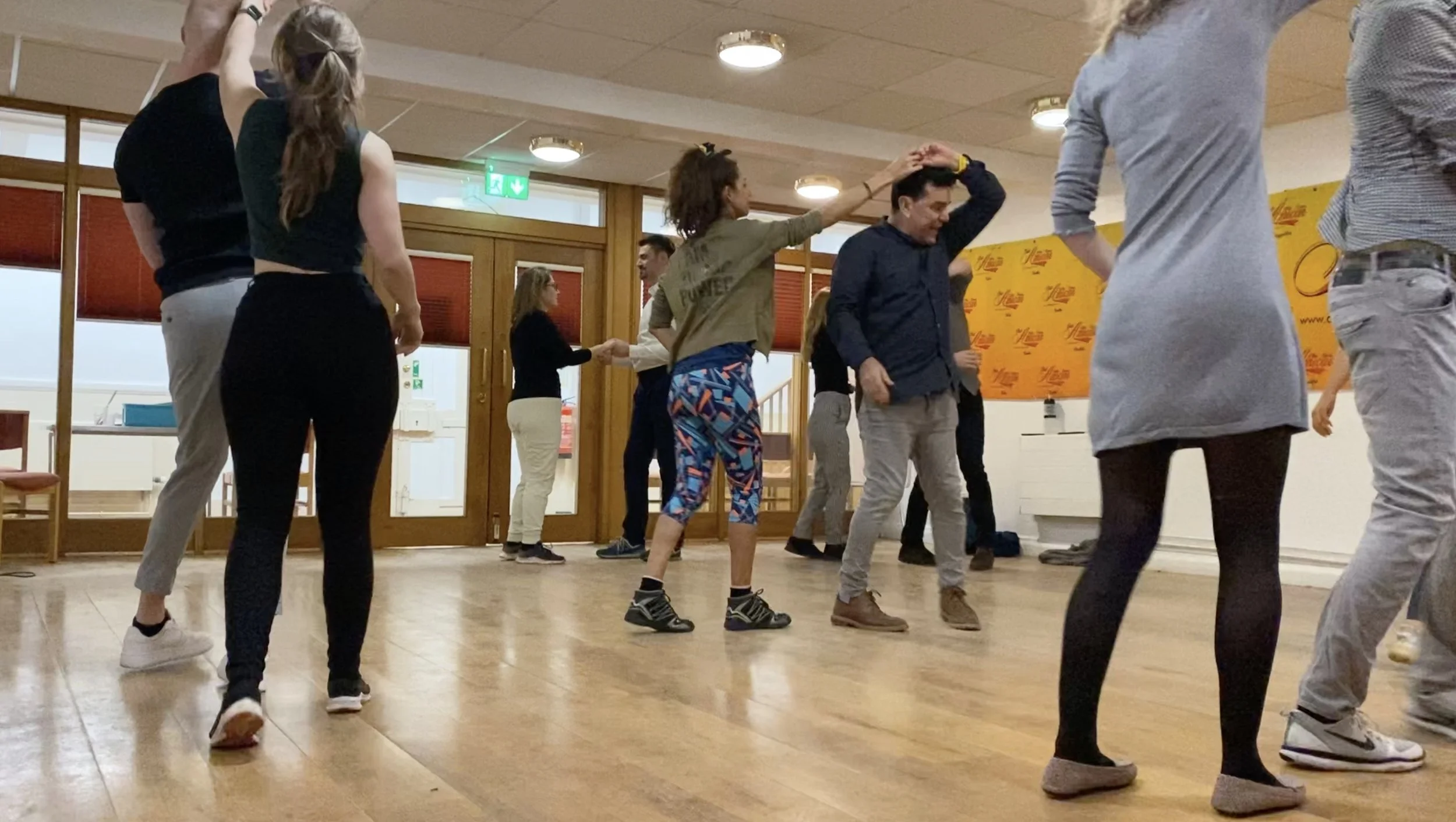
The main difference between salsa and bachata is tempo and footwork complexity: salsa is faster, danced on a fast 8-count rhythm with quick turns and spins, while bachata is slower, danced on a simpler 4-count rhythm with more emphasis on hip movement and close connection with a partner. Both are Latin partner dances, but they come from different countries, use different music styles, and feel quite different on the dance floor.
Here's a full breakdown of how they compare.
Where Each Style Comes From
Salsa originated in Cuba and Puerto Rico, later developing further in New York, and draws on a mix of Cuban son, mambo, and other Afro-Caribbean rhythms. Bachata originated in the Dominican Republic, evolving from a folk guitar-music tradition into the dance style known today, with roots that are more romantic and melodic in tone.
Music and Rhythm
Salsa music is fast-paced and built around complex percussion, typically danced on counts 1-2-3, 5-6-7, with a pause on counts 4 and 8. Bachata music is slower and guitar-driven, danced on a simpler 1-2-3-tap pattern, which makes the rhythm easier for most beginners to follow initially.
Footwork and Body Movement
Salsa footwork involves quick, precise steps combined with frequent turns and spins, requiring sharper timing and coordination. Bachata footwork is simpler and slower, with the distinctive style coming from hip movement rather than complex steps, making the basic pattern faster to pick up.
Partner Connection and Closeness
Salsa is typically danced with a looser frame, allowing space for spins, turns, and more dynamic partner work. Bachata is danced in a closer embrace, with more emphasis on connection and shared movement between partners rather than technical patterns.
Which Is Easier for Beginners?
Most people find bachata easier to pick up initially, since the rhythm is slower and the basic step pattern is simpler to learn in a first class. Salsa has a steeper initial learning curve due to its speed and turn patterns, but many dancers find it more versatile once the basics are mastered, since it opens up a wider range of technical and performance styles.
Can You Learn Both at the Same Time?
Yes, and many dance schools teach them together since the styles complement each other well. Learning bachata first can help build confidence with partner connection and basic timing before tackling salsa's faster pace and turn patterns.
Frequently Asked Questions
Is bachata easier than salsa? For most beginners, yes. Bachata's slower tempo and simpler footwork make it quicker to learn in a first class, while salsa typically takes longer to feel comfortable with due to its speed and turn patterns.
Do salsa and bachata use the same music? No. Salsa uses fast, percussion-heavy music, while bachata uses slower, guitar-driven music with a distinctly different rhythm and feel.
Can I learn salsa and bachata at the same dance school? Yes, most Latin dance schools teach both styles, and many students learn them alongside each other since the skills complement one another.
Which style is better for social dancing? Both are widely danced socially, but bachata's closer connection style tends to feel more intimate, while salsa's energy and turn patterns make it a livelier social dance.
Do I need a partner to start learning salsa or bachata? No. Beginner classes are typically structured with rotating partners, so you can start learning either style without bringing your own partner.
Try Salsa and Bachata Classes in London
Club Azucar teaches both salsa and bachata for complete beginners in Hammersmith and Chiswick, with no partner or prior experience required. Book your first class today.